Today’s Bloganuary prompt is: What makes you laugh?
Laughter is a sign that something violates your expectations and surprises you in a delightful way. I laugh at silly science puns and clever turns of phrase. I laugh at my kid’s antics and sometimes the surreal. I laugh less than I used to, which I understand is common with age. I would have made a goal to laugh more this year, but I couldn’t figure out how to measure it. A real sign of whimsy.
Today’s Bloganuary challenge prompt is: Who inspires you?
Inspire is an interesting word because it both means to motivate and to breath in. From Google, we learn “Middle English enspire, from Old French inspirer, from Latin inspirare ‘breathe or blow into’ from in- ‘into’ + spirare ‘breathe’. The word was originally used of a divine or supernatural being, in the sense ‘impart a truth or idea to someone’.” So we are looking for someone who breathes new life into us. If this comes as an interview question, Indeed has a framework for answering this question quickly and neatly.
However, in my experience, inspiration is neither quick nor neat nor can be completely carried by only one person. It is one of the closest things I have experienced to real magic and I receive inspiration from family and fiction, near and far. Just about every member of my extended family has breathed new life into me, but especially my parents, who have always done their best to support and prepare me for whatever comes next. I love the chemist mother in “A Wrinkle in Time” as she leans into weaving together her personal life and scientific exploration. I’m inspired by Martin Luther King Jr.’s vision in “I Have A Dream.” to create more freedom and equality for all of us.
As I get older, however, I start to think that although inspiration is important, it might be even more important to remove the sources that extinguish your spark, that take the air out of your sails, and smother you to the point you feel ready to expire. Whether it is media that shows people being mean to know reason to their supposed friends or a real-life companion that dims your glow, no amount of inspiration can overcome a strong enough sink.
Today’s Bloganuary prompt is: What is something you wish you knew how to do?
There are so many things to wish for, it can be hard to narrow it down. Ideally, I’d like to know how to control matter and energy and live free from consequences, but those are genie-in-a-bottle-type wishes. In the real world, I am more interested in wishes I can work toward. One particular wish I am working on is knowing how to communicate more effectively with those around me.
Moving to a country where I do not speak the language as an adult has been a challenge on a number of levels. Even as a young person, learning languages was not among my strengths. As an adult, practicing a new language is like having a foreign invader in my mind and mouth. I don’t hear all the relevant sounds. Never the less, I continue to practice and learn because every step at getting better makes my daily life smoother.
Blogging is another opportunity for me to practice my communication skills. This a place to record, clarify and crystallize my thoughts. This is one factor that motivated me to take part in this Bloganuary challenge. Without work, wishes wither and wane.
Today’s Bloganuary prompt is: What was your favorite toy as a child?
The play I remember most as a child was imaginative and typically in nature. My imaginary friend, Drink, and I would roam the back yard and garden to play in the creek, a tree house, or other things we happened upon. A fallen log would become a whale or a fortress. A bit of moss would host a fairy garden. I loved feeling the wild directly, the cool water and mud squishing between my toes, earthy smells, chasing chickens, even eating wild plants (that my parents had taught me to identify) like violets or sour grass.
Because my imagination got so much practice in those days, I also loved books, especially being read to. I loved inhabiting worlds that I knew something similar, like Laura Ingles Wilder books, or E.B. White’s Charlotte’s Webb or Trumpet of the Swan, or those more remote like the Narnia series or Mary Poppins.
I certainly had many of the popular 1980’s toys. Dolls from Barbie to Cabbage Patch, Strawberry Shortcake, and a tote bag full of Care Bears. Ficher-Price, Legos, Mr. Potato Head, My Little Ponys, Voltron, and an A-team van. I’m glad that I had the toys of my time and I remember the colorful pieces of plastic fondly. It’s just nothing like the compelling memory of being close to the Earth, in tune with her cycles and wild ways.
Today for Bloganuary we are supposed to write about the last time we left our comfort zone.
I laughed at reading that prompt because I feel like I need to work harder to remember the last time I was truly in my comfort zone. I have been living in Germany with my family for the last 3.5 years. There are many advantages and opportunities, but I struggle with the language and the culture. Then we visit the US and life and culture there has moved on without us. So I try to appreciate the best of where I am while I’m there and defend whatever hard won comfort zone I can find.
On the other hand, the problem with comfort zones is that it is possible to get stuck there. It’s just so comfortable that it can seem better to never leave. If living through a plague has taught me anything, its that simple human interactions can be great, but people need to stay in practice with social norms or we forget and drift apart. I have also learned that without the support of a steady, secure comfort zone it is difficult to be in a state to venture out and learn.
A recent trip out of my comfort zone includes participating in the TechLabs Aachen Digital Shaper program in Data Science. It is an optimal mix between practicing skills I already have and learning new skills because the program has an online learning platform part that is completed independently and a group project. This is a nice balance between independent learning and working together to do or make something.
My two favorite stretches of interstate in the US are I-70 W of Denver and I-10 along the Gulf coast. These days, my road trip planning has a more European focus. For Europe, I most prefer trains for getting between cities, so if we are going by road we must be seeing some nature. One recent summer, we had a fantastic road trip from Aachen, Germany down to Bled, Slovenia and Pula, Croatia and back. There was a definite nature focus while we avoided cities for the COVID times.
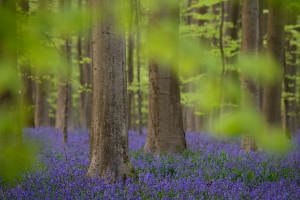
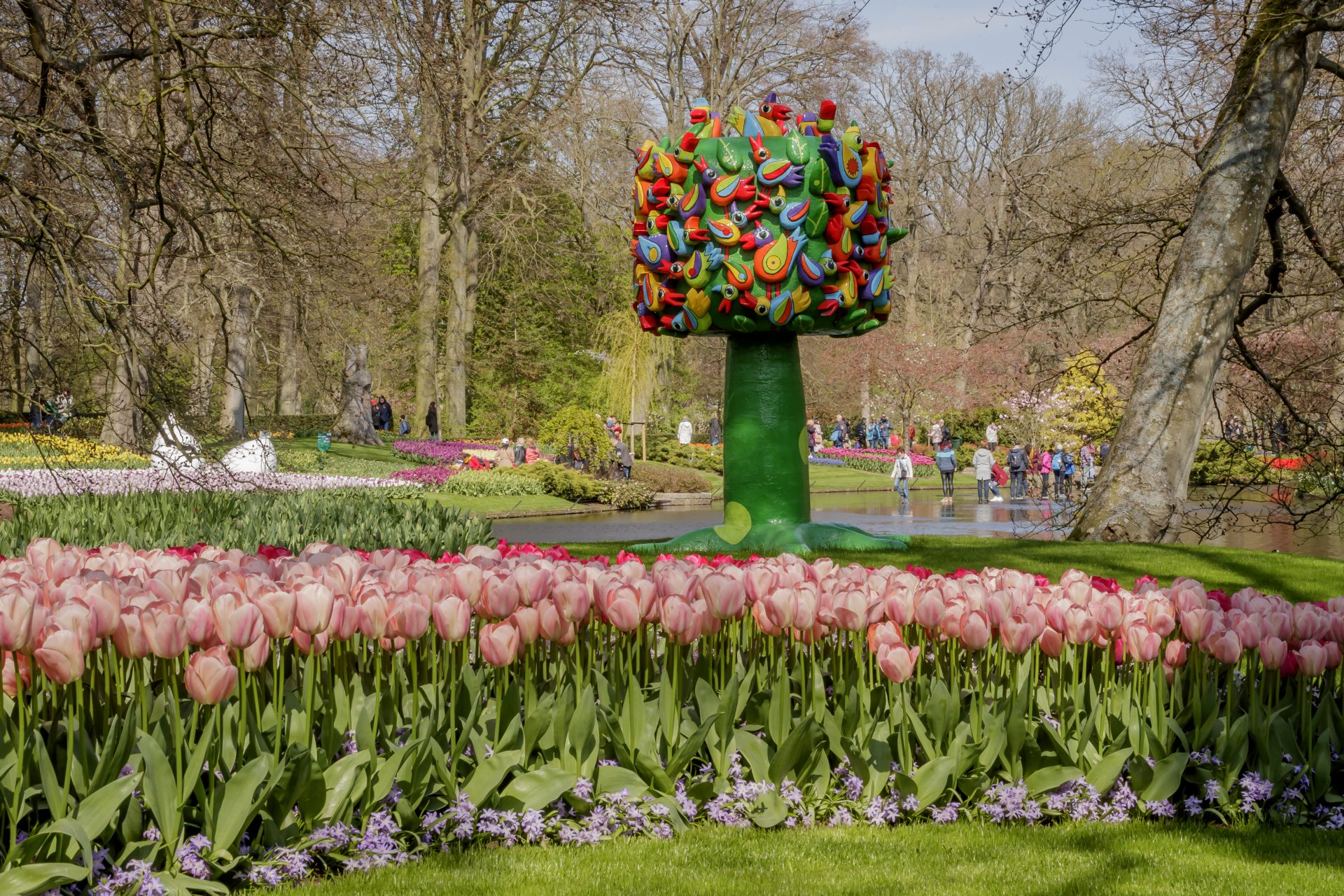
The next great road trip I would love to take in the spring to see the heart of Europe in bloom. In mid-April, we would go to the Daffodil Route in the Eiffel, a German national park just south of us. Then we would head to Hallerbos Forest in Belgium that is carpeted in bluebells that time of year. Next we would drive to Champagne, France and spend some time gossiping about how everything else is just sparkling wine. As much as it pains me, we would skip Paris on this trip because I love to show up there emerging from Gare d’Nord in the center of the city on foot. We would drive around Paris to Givery, France to check out Claude Monet’s gardens in full bloom. Next stop would be Normandy Beach in France, to see the historic WWII battleground. Then we would head back along the French and Belgian coast with a stop in Bruges, Belgium to see the canals, belfry, and basilica. Finally, we would drive to Keukenhof and the Dutch tulip gardens.
I signed up for the Bloganuary Challenge to help get into the habit of posting more. The first prompt is what advice I would give my teenage self. I’m not sure I would give her any advice, because I think she did pretty good on her own and I wouldn’t want to throw her off. Many people say that they would tell their former self to not worry so much, but I see how her anxiety and ambition motivated her to do cool things when there was no guarantee that she would. That’s not to say that I did not make mistakes, learn, or have regrets. However, on the balance things have turned out more than ok so far.
I now have almost teenage kids of my own, so I can also talk about the advice I give to them. Today I was cuddling with my daughter watching the part of Dirty Dancing where Baby confronts the snobby waiter, Robby. He says that some people count and some people don’t and tries to give Baby his copy of the Fountainhead. I commented to my daughter that she should not date any boys in college who are really into Ayn Rand. A few minutes later, my husband, Rob, came in and we shared that we were discussing Ayn Rand. His reply was something like, “Oh yeah, I liked her stuff in college.” So apparently now I live in a sitcom. So maybe my best advice is to live with your own laugh track.
Yesterday I posted my favorite fiction from 2021. The real world is also interesting and important. Here are my favorite non-fiction works I read, in no particular order.
My favorite insight from this book is that rethinking becomes more valuable as the world changes faster.
My least favorite wording of this book was calling people who can interrogate their beliefs critically, rationally, and continually “scientists.” I’ve been a scientist and I’ve worked with many scientists and people in that line of work are at least as susceptible to various biases as anyone else. Still, clearly not all politicians, prosecutors, or preachers act like the personas he invokes either. It’s a useful way to refer to a defines set of traits and behaviors.
If things like identity, polarization, consensus, disagreement, flexibility, and transformation are not on your mind these days, I suspect you are not paying attention. I like the framing – revisit your assumptions periodically, revise as needed – and the vision – it’s an increasingly important skill to be able to find out what you don’t know and be able to change your mind.
This year I started experimenting with fasting, and this book was a piece of that journey. I still love food and don’t expect to get skinny, but I also would like to avoid metabolic disorders and more serious health problems as I get older. Living in Germany, most stores are closed on Sundays and Holidays. At first, as an American used to being able to get anything 24/7 , I found this weird and inconvenient. Over time though, I found that having some time off that you could not run errands allowed me to relax a little more deeply, make time for journeys out in nature, family and quiet.
“Hormones are central to understanding obesity. Everything about human metabolism, including the body set weight, is hormonally regulated. A critical physiological variable such as body fatness is not left up to the vagaries of daily caloric intake and exercise. Instead, hormones precisely and tightly regulate body fat. We don’t consciously control our body weight any more than we control our heart rates, our basal metabolic rates, our body temperatures or our breathing. These are all automatically regulated, and so is our weight. Hormones tell us when we are hungry (ghrelin). Hormones tell us we are full (peptide YY, cholecystokinin). Hormones increase energy expenditure (adrenalin). Hormones shut down energy expenditure (thyroid hormone). Obesity is a hormonal dysregulation of fat accumulation. Calories are nothing more than a proximate cause of obesity.” ― Jason Fung, The Obesity Code: Unlocking the Secrets of Weight Loss
I have a love/ hate relationship with self help books. I was a psychology minor in college, so I like to read the latest theories. But main stream books are by definition pop psychology and anyone can publish their theories and some do not fit to my experience to the point of possibly crossing the border from bad advice to dangerous. Luckily, on the balance, this was not one of those books for me. I appreciated where insights were supported with data, which was frequent in this book.
This book is framed in terms of romantic relationships, but I thought that the insights were much more generally applicable to any intimate relationship in my life. We don’t grow out of the need to connect authentically with our loved ones. When we feel disconnected, it’s painful and we tend to resort to bickering. That happens with my kids when they don’t have enough attention too.
It was also useful to me to see examples of where our behavior is driven by our emotions even when we explain it in terms of our logical thinking. So teaching communications skills to better bicker about stuff that does not matter will never bring someone the love they want. We can only be vulnerable with someone when we are strong enough ourselves and we can trust them. That’s what intimacy is, and caricatures of it do not resemble the real thing for long.
“We have to dive below to discover the basic problem: these couples have disconnected emotionally; they don’t feel emotionally safe with each other. What couples and therapists too often do not see is that most fights are really protests over emotional disconnection. Underneath all the distress, partners are asking each other: Can I count on you, depend on you? Are you there for me? Will you respond to me when I need, when I call? Do I matter to you? Am I valued and accepted by you? Do you need me, rely on me? The anger, the criticism, the demands, are really cries to their lovers, calls to stir their hearts, to draw their mates back in emotionally and reestablish a sense of safe connection.” ― Sue Johnson, Hold Me Tight: Your Guide to the Most Successful Approach to Building Loving Relationships
I follow Jess Wade on twitter and love her project to include more female professors on Wikipedia. In her experimenting with different science communication media, now she has a children’s book. My daughter and I watched a video of it being read to us. At 10, she was underwhelmed, as she may be too old for it. Or it might be that she already lives with a mom scientist who has been telling her about materials since she was small. Still, I appreciate that it is a thing that exists in the world. I think I would have liked it as a kid. As a mom, I can imagine playing a game pointing out things in the world made of different materials with curious littles. It gives me more hope for the future than any of the A.I. doomsday scenario tomes I read this year.
An acclaimed physicist and debut picture-book author introduces readers to the tiny building blocks that make up the world around us. Elegant, friendly text and stylish illustrations explain atoms, the elements, and other essential science concepts and reveal how very (very) small materials are manipulated to create self-washing windows; stronger, lighter airplanes; and other wonders of nanotechnology. – Goodreads blurb
A mix of science and science fiction reading teach me about the world and help me imagine what’s possible. While that doesn’t cover all the material I read this year, it certainly summarizes my favorites. Im breaking this up into fiction and non-fiction, listed in the order I read them. My family teased me about picking 4 books, but that means that it was a top 10% book, and I like that I had to restrict myself to the best of what I read.
This is the year that I fell in long-distance love with Kameron Hurley, a sci-fi writer about my age based out of Dayton, Ohio. To be fair, I also found Ohio to be a surreal place to live 😉 If you have not read her “We have always fought” essay, you should now. Point is, she is all about bad ass warriors that happen to be female, and that is a theme in the Light Brigade, although that might be a bit of a spoiler because the main character, Dietz, does not use pronouns until the end of the book. I have loved time-travel science fiction since I came unstuck in time with Kurt Vonnegut in Slaughterhouse-Five in high school. Hurley delivers a fresh and also timeless take on a timeline that skips around as a way of experiencing war.
“Imagine us all standing in a circle, trying to describe an object to one another, and as we agree on its characteristics, the thing at the center of our circle begins to take form. That’s how we create reality. We agree on its rules. Its shape.” ― Kameron Hurley, The Light Brigade
Staying with the time-travel theme, I also read Kindred. It was my first Octavia Butler work, and I read it and the Parable series in one gulp. In 2021, I heard about a lot of white people reading as one way to try to understand race and diversity, and also heard some skepticism about this practice. In contrast to the modern tomes, this book is about as old as I am. I did not come to this book to add some diversity to my reading list, but it did open my mind to how much modern black women still might have to contend with the ghosts of generations past. I had the distinct impression that she was writing to understand who she was and how she got here for herself as much as for educating anyone else. As it should be.
“Sometimes I wrote things because I couldn’t say them, couldn’t sort out my feelings about them, couldn’t keep them bottled inside me.”
This book was a fun thriller read. While the plot and details were all clearly fiction, there were some nods to reality- serving a Secretary of State under a former political rival, the continuous onslaught of underestimation that middle age women face, entanglement between press and political players, and how down right creepy intimate gifts like *your* perfume or *your* favorite flowers can be when they come from a stalker/ rival. It demonstrates how Americans have a complex and evolving relationship with the rest of the world. Parts of it seem tongue in cheek in that it pokes fun at its role as propaganda. I grew up in the 80’s and 90’s and loved Top Gun, so maybe I’m a sucker for some types of propaganda entertainment.
“The propogandist is his own first customer.” ― Hillary Rodham Clinton, State of Terror
Artificial intelligence was a reading theme for me this year, both in science and fiction. I read the Asimov classic I, Robot, which was fantastic, foundational and dripping with sexism. Lots of the non-fiction I read in this field was oddly dystopian considering my 10 year old tries to ask Alexa how she should do her hair. Origin struck the right balance for me between dystopian and something I want. Plus it is a fast paced romp through Spain, which I love. I hope the future is as fun as is it scary and weird. I love seeing what humans can create and how they live with the web of actions and consequences.
“We are now perched on a strange cusp of history, a time when the world feels like it’s been turned upside down, and nothing is quite as we imagined. But uncertainty is always a precursor to sweeping change; transformation is always preceded by upheaval and fear. I urge you to place your faith in the human capacity for creativity and love, because these two forces, when combined, possess the power to illuminate any darkness.” ― Dan Brown, Origin
Books have been an important part of my life- a way of learning about myself, the human experience, and the world, a way to entertain myself, organize my thinking, and keep me company when I’m lonely.
Certainly, there have been periods of my life where I have gotten away from reading for pleasure. After completing my thesis, it was years before I picked up a book for fun. When my children were very little, I admit I did not read much. But when I look at the periods of the fastest personal growth in my life, they are typically proceeded by lots and lots of reading. And like many people last year, I have felt lost, stuck, and alone. So in 2021, I set a nebulous goal to read more.
I read about 35 books in 2021, despite not reading much while I was in the US for the summer. I got a Kindle for Christmas 2020, and it got quite a workout this year. My husband and I mostly replaced a nightly TV show from Netflix with reading before bed. We seem to both be enjoying the shift. The more I read, the more I found that I wanted to read. So many books, so little time!
As my reading list started growing faster than my ability to finish books, I gave myself permission to not finish books that did not turn out to be a good fit for whatever reason. A younger me would have stuck with whatever she started, unless it was an extreme outlier, but that girl had more time than I do. I’ve also started dropping books from my reading list if I lose my enthusiasm before I even start.
At some point during the year, I added audiobooks on my walks, bike rides, and while doing domestic chores around the house. Almost everyone likes being read to. With the caveat that some books work better as audiobooks than others.
So, like may others as we slide toward 2022, I’m reviewing how this year went and thinking about what I want for next year. My 2021 goal to read more surpassed expectations. So I’m keeping it. But I can’t clearly remember everything I read off the top of my head. So for 2022, I plan to use this blog as a public reading record.