Blog

  • Remembering Ruth Bader Ginsburg

    Last Saturday, I woke up to a text that our beloved Supreme Court Justice and equal rights warrior had passed on the eve of Rosh Hashanah, September 18th, 2020. This NPR news story confirmed the bad news. The supreme court blog has a detailed post honoring her life. This video is a quick summary of her in her own words, something she was passionate about using.

    Like so many that have admired her work, I have been struggling to mourn her loss and make sense of what her absence might mean. For me, that means reading the words she leaves behind.

    Some favorite quotes:

    “My mother was very strong about my doing well in school and living up to my potential. Two things were important to her and she repeated them endlessly. One was to ‘be a lady,’ and that meant conduct yourself civilly, don’t let emotions like anger or envy get in your way. And the other was to be independent, which was an unusual message for mothers of that time to be giving their daughters.”
    ― Ruth Bader Ginsburg, My Own Words

    “I tell law students… if you are going to be a lawyer and just practice your profession, you have a skill—very much like a plumber. But if you want to be a true professional, you will do something outside yourself… something that makes life a little better for people less fortunate than you.The Mercury News, February 6, 2017

    “So often in life, things that you regard as an impediment turn out to be great, good fortune.”

    “Women belong in all places where decisions are being made. It shouldn’t be that women are the exception.”

    “Fight for the things that you care about, but do it in a way that will lead others to join you.”

    “When I’m sometimes asked when will there be enough [women on the Supreme Court] and I say, ‘When there are nine,’ people are shocked. But there’d been nine men, and nobody’s ever raised a question about that.”

    “I don’t say women’s rights—I say the constitutional principle of the equal citizenship stature of men and women.”
    “Women will have achieved true equality when men share with them the responsibility of bringing up the next generation.”

    “Reliance on overbroad generalizations … estimates about the way most men or most women are, will not suffice to deny opportunity to women whose talent and capacity place them outside the average description,” said Ruth Bader Ginsburg in a majority opinion that allowed women into a military academy, frequently using examples of how discrimination based on sex hurts men too. But “Some of my favorite opinions are dissenting opinions,” Ginsburg told NPR. “I will not live to see what becomes of them, but I remain hopeful.”

    In 1979, she shared Some Thoughts on Judicial Authority to Repair Unconstitutional Legislation. She introduced the topic with, “Among governing institutions, the judiciary has been described as”the least dangerous branch.”‘ Courts in our system have the awesome power to declare laws unconstitutional, but judges command no troops, and are said to lack the power of the purse. My remarks address a facet of the purse power supposition: When a legislative product is constitutionally infirm because it is under-inclusive, what remedies lie within the judicial province? Discussion will focus on the question whether a court may order inclusion of a category of persons left out by the legislature, a question particularly pointed when the court’s inclusion order would mandate increased government spending.”

    In 2010, she shared The Role of Dissenting Opinions, opened saying “It is a subject I have had to think about more than occasionally in recent terms.” and closed with, “although I appreciate the value of unanimous opinions, I will continue to speak in dissent when important matters are at stake.”

    May her memory be a blessing.

  • Shana Tovah!

    img_2953

    img_2954

    img_2955

    img_2959
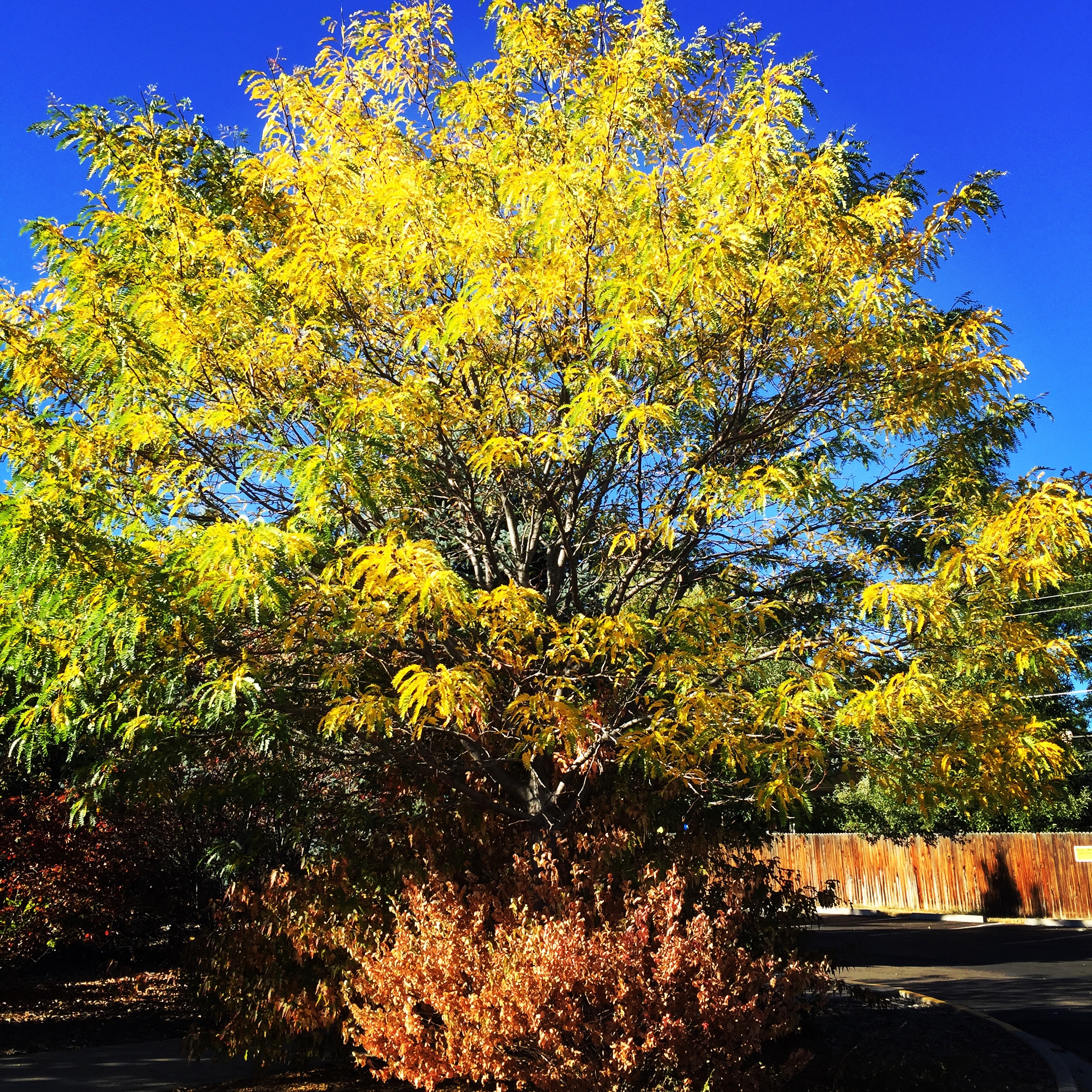
    Let’s borrow from our Jewish brothers and sisters today and take this opportunity to think about the wrongs we are responsible for and how we can make amends. It’s a beautiful fall day. Why carry hurt with us into the next season of our lives? Probably because it is easier to hide and ignore our shadow sides. But remember: it takes a lot of compost to grow a beautiful garden.

  • Light and Shadow

    image
    “When you light a candle, you also cast a shadow.” ― Ursula K. Le Guin

    Notice the contrast between light and shadows today. Play with the contrast. Sunlight has already completed a long journey to reach you. This is mindbogglingly more true for other star light. Light reflected from the moon reminds us that not all journeys are a neat path from A to B.

    Watch dust trace out the fractals of Brownian motion. So much is going on all around us, with or without our attention, but waiting there for us when we tune into it.

  • Happy Autumnal Equinox!


    This video from NASA shows how the Earth was illuminated between 9/19/2010 and 9/19/2011 from the vantage point of a geosynchronous satellite.

    Groups of people have long celebrated this day marking the beginning of fall for us norther hemisphere dwellers. The equal hours of day and night for which the day is named is slightly dependent on latitude because of how sunrise and sunset are defined (the edge of the sun passing the horizon vs. the center of the sun). For all of us, today is the day that the tilt of the Earth points neither toward nor away from the sun. We pass through this balance point as the sun’s most direct rays pass from the northern to the southern hemisphere. Instead of the moon rising 50 minutes later than the day before, there is a period around the equinox that it only rises 30 or 40 minutes later, leading to more light earlier in the night, traditionally good for harvests.

    The equinox is the harbinger of change, as days shorten and nights lengthen and warm seasons become cool. Now is the time for harvest, reaping the rewards of the seeds you planted earlier, for deciding what is important enough to you to protect for the coming winter, and cutting away the things that won’t weather. Let us honor this day by choosing a recent victory or achievement to celebrate and finding one thing to donate, throw away, stop doing or otherwise choose to let fall away. It takes a lot of compost to grow a beautiful garden.

  • Idea life cycle

    I have cycled through a lot of ideas in the last couple years. Some were closely related, others seemingly disparate. I would like to record my process so I can use it again later.

    Generating my own ideas requires some combination of inspiration and isolation. If I am stuck on a particular step, I should ask myself which of these dimensions I am missing.

    1. Intent
    If you don’t know where you are going, any road will take you there.” and “Not all those who wander are lost.” are both double edges swords. You can cover a lot of ground without a destination, and while the journey may be pleasant, it is difficult to know when you have arrived.

    2. Immersion
    There are very few topics where you can contribute something meaningful without first understanding what is already there, gaining some fundamental skills, and learning a few tricks.

    3. Incubation
    Maintaining conditions suitable for the development of an idea may depend on the field, but can include talking to others, writing, math, coding, or otherwise working through the idea as well as letting it sit in the back of your mind while you go for a walk or take a shower.

    4. Insight
    This is when you have turned the topic around enough that you have seen something that is uniquely yours. It can arise as an AHA! moment, or slowly appear like mountains over the horizon.

    5. Implementation
    Now that you have something interesting, do you want to share it with the world? Usually this requires work to put it in a form you can share. Your intention can help you identify when you are done.

    6. Integration
    How does that thing you just made fit in with your personal story? If you have an incoherent string of things, figuring out how they fit together might help figure out what comes next.

  • R Error: unexpected input in “{“

    I’ve been using R lately to help look at some greenhouse data at the Grow Haus. The Grow Haus is a great space filled with good energy and people on a mission to provide sustainable food production, distribution, and education. And good people need good data.

    So, I was crushed when my formerly working script to read a .csv file into R and graph that data stopped working. For reference, I am working on a MacBook Pro running OSX (10.6.8) and running R version 3.0.1. I kept getting Error: unexpected input in “{“ when I ran it from the terminal command line using Rscript file.r.  It worked last week. What gives?

    I first tested each individual line of the script in the R console, and they all worked. This was originally more frustrating, but then I figured it was a communication problem and decided to run R through the terminal. To start R from the command line instead of just in the console, type R. To load a script into R, use source(‘file.r’). I got the same error again.

    So I opened the file in the terminal using vi file.r. This showed me that when I had last saved the file in TextEdit, it had switched from plain text to rich text format and injected a bunch of junk as a header that was preventing R from reading the script. I switched it back to plain text in TextEdit (Format< Make Plain Text) and set the Open and Save preferences to use Plain Text Encoding (UTF-8) when opening or saving files. Then the script magically worked again. Boo to text editors switching stealthily to .rtf mode! Maybe this will be a nudge to get more comfortable using a terminal text editor.

    Some bonus R data checking tips: After running source(‘file.r’), ls() will list the loaded variables in your workspace. If you have a table loaded called data, you can see the header and first could rows using head(data).

  • Acres per finished steer of feedlot vs. grassfed beef

    According to this reference, grassfed beef can be stocked at 1.6 steers per improved pasture land acre and go from 525 pounds to 1050 pounds from May to October.  That means about 0.625 acres of improved pasture per finished steer. Unimproved pasture takes more, seemingly 2 – 4 according to forums I found.

    According to this description of pounds of corn per pound of beef, they estimate that it takes 17 – 62.5 bushels of corn to finish a steer. Let’s say we can produce 140 bushels of corn per acre. That means that it takes 0.13 – 0.45 acres to finish feedlot beef. I also learned that 6 pounds of feedlot feed contains 1 pound of corn and the balance includes distillers grain left over from making ethanol and corn gluten from high fructose corn syrup. So the corn nutrients are extracted in a variety of different methods before they reach us.  Cows are brought to the feedlot at 600-900 pounds and are slaughtered at 1300 pounds, which means that they are generally foraged for a while first and slaughtered larger than grass fed beef.

    It seems like it probably takes about three times as much land to have a grass fed steak vs. a feedlot steak.

  • What is special about petroleum?

    • Petroleum has a high energy density relative to renewable alternatives. 
    • In addition to dominating the transportation fuels market, a staggering volume of our petroleum consumption is in the form of chemicals or other products.
    • By being made into many end products at such large volume, petroleum ties together many markets we may currently think of as separate. 
    Petroleum has a high energy density relative to renewable alternatives, many of which were popular throughout much of history. Each energy source we pick to replace the last one is more energy dense, more concentrated, than the last one. Wood to coal. Animal oils to petroleum.  It is why people get so excited about hydrogen, despite some concerns about safety and infrastructure. Paul Graham discusses this phenomenon of increasing density of stuff we like in The Acceleration of Addictiveness and its effect on us in terms of drugs and technology (like t.v. and the internet), but it is clearly and measurably true in terms of popular sources of energy.

    Refining petroleum started being commercially viable in the industrialized world when kerosene replaced whale oil as the lamp oil of choice. It is possible that this transition to petroleum saved some species of whales from extinction, as the demand for lamp oil was growing quickly at that time. People sometimes use this as an example of capitalism saving the world, but assigning causation is difficult and I think that all we can say is that they might have happened around the same time. Whether we ran out of whales or technological advances + capitalism or changing fashions saved the whales, this represents just one instance of the general trend of things in our society becoming more concentrated.

    Oil lamps are a good choice for illumination in areas where electricity is not widely available, which is no longer the case in most areas of the U.S. If petroleum had been used  only for lamps, it would not have the place it does today in our society. However, the internal combustion engine, running on gasoline or diesel, was popularized around the time incandescent lights were replacing oil lamps in the late nineteenth century. When flying became a reality instead of a dream, the kerosene formerly used in oil lamps fueled jets instead. Petroleum producers have had decades to centuries to find uses for distillate fractions that have less demand. Which brings us to today.

    In addition to dominating the transportation fuels market, a staggering volume of our petroleum consumption is in the form of chemicals or other products. Since we consume almost 20 million barrels of oil per day in the US, even a small percentage of oil consumption can amount to thousands of barrels per day of “Miscellaneous Products“. So what else is made with petroleum besides the gas we put in our car? More than 2/3rds of our petroleum consumption is for transportation.

    Major refinery products include:
    • gasoline (2/3rds, but a decreasing share, of our petroleum transportation fuel consumption),
    • fuel oil (includes desiel fuel and heating oil, but also bunker fuel used to power tanker ships because it is too nasty to burn in other contexts),
    • liquified petroleum gases (inlcudes the propane loved by Hank Hill, but also contains butane and other light molecules, used for grilling, rural heating, and apparently as a refrigerant),
    • jet fuel (kerosene-like fuel to power commercial or military aircraft),
    Minor refinery products include:
    • still gas (non-condensed or non-condensible gas byproducts of refining petroleum, including methane)
    • coke (like coal, also fires kilns for making cement and steel, but pure stuff can be used to make electrodes. Coke is more prevalent in non-conventional oil sources.)
    • Asphalt and Road Oil (Not only are cars powered by petroleum, but the roads are made out of it too.)
    • Kerosene
    • Waxes and lubricants (like motor oil or for construction equipment)
    • Naptha and other oil for feedstocks and miscellaneous products

    So what kind of feedstocks are these chemical intermediates? Where else does petroleum go in our daily lives? The answer goes deeper than most people understand. It certainly goes deeper than anything I was aware of, even while working in the renewable energy field. Oil companies talk about plastics, fibers, medical devices, and fertilizers. But that only scratches the surface.

    My awakening to the strangeness of our acceptance of petroleum-derived products started when my midwife asked me to get vegetable based oil for my baby following delivery. It was only then that it struck me as odd that it was a cultural norm to rub petroleum distillate on new born babies in the form of baby oil. Back when I was working on developing cellulosic ethanol at NREL we would talk about how specialty chemical byproducts could be interesting, but if you made them with any appreciable yield, they would flood their market and drop in value as fuel making scaled up. The conventional wisdom was that the only 3 markets that scale together are fuel, livestock feed, and (human) food. After about three years of hearing this, one of the times someone said it to me, it struck me. If we know that for sure, it must already be the case. Oh My God, They ARE FEEDING US PETROLEUM.

    We eat petroleum both directly and indirectly. Indirectly, we get it through pesticides,  fertilizers and possibly animal feed. I can only link directly to the general history page, but if you look at the 1970 entry, “A Hunger for More“, BP talks about about extracting proteins from oil to use as fish feed to make fish an affordable dinner option for the average American. In fact, BP was  in the “nutrion” business until 1994.

    Michael Pollan apparently mentioned that there are petroleum products in chicken nuggets in 2006.  I don’t eat chicken nuggets, so I may not have paid as much attention to this claim as I now think I should have. But the part I heard through friends and media was that most meals were corn and that was bad. I agree that a diet sneakily full of corn and corn derivatives like high fructose corn syrup may not be healthy, but don’t find corn being hidden in my food quite as disturbing as the concept of eating a petroleum-derived diet. Synthetic colors and flavors are in many food, drug, and cosmetic products and are petroleum-derived (or, to be fair, coal tar-derived). Yes, pharmaceuticals and the processes to make drugs often involve petrochemicals as well.

    By being made into many end products at such large volume, petroleum ties together many markets we may currently think of as separate. According to a break down of GDP by industry, The US 2009 GDP was $14.1 trillion dollars. Of that, oil and gas mining was worth $142 billion, petroleum and coal products were worth $120 billion, chemicals, plastics and rubber were worth $ 274 billion, and transportation and warehousing was worth $390 billion. This is already a formidable chunk of our GDP. But If you also consider seemingly unrelated industries, like the $1.05 trillion health care industry and $133 billion dollar agriculture industry may also be intimately tied to petroleum and it’s derivatives, you start to get a picture of how truly valuable this problem is.

  • A short history of petroleum

    The story of petroleum is frequently told in terms of black and white, good and evil, are you with us or against us. I think that is an over-simplified fairy tale, and our current relationship with oil as insidious rather than evil. So lets start with the history of petroleum as told by those who make it. This is a true story of the victories of American ingenuity, and perhaps a cautionary tale of how fairy tales can take on a life of their own.

    In the beginning, there was John D. Rockefeller’s Standard Oil, founded in 1870 and quickly grown into a monompoly. Interestingly, the surpreme court broke up Standard Oil in 1911 and the model T was introduced in 1908, so the majority sales of the first petroleum giant was not today’s gasoline, but kerosene. Almost every major oil producer in the US today is descended from Standard Oil.

    BP started as the Anglo-Persia Oil company with an English entrepreneur risking his fortune to find oil in Persia. BP now owns several of the U.S’s original oil companies, including pieces of Standard Oil of Ohio and ARCO. My Granddad and Grandma Wolfe worked for Standard Oil of Indiana, which eventually became Amoco before being acquired by BP. Chevron, formerly Standard Oil of California, had revenues of $1 billion for the first time in 1951 and now owns Texaco, a former Standard Oil competitor.  ConocoPhillips merged in 2001 and is the third largest energy producer in the US. Conoco used to be part of DuPont.  Phillips purchased ARCO Alaska before the merger. ExxonMobil, formerly Standard Oil of New York (Exxon) and Standard Oil of New Jersey (Mobil), is the largest remaining chunk of Standard Oil. The Hess Corporation grew up delivering residual fuel oil and took 30 years to get into petroleum drilling.  Koch Industries, one of the largest privately held companies in the world, was born in 1927 with technology to make gasoline from heavy oil. Notice how they integrate fossil and natural products today. Marathon Petroleum, and it’s upstream cousin Marathon Oil used to be The Ohio Oil company, and also part of Standard Oil. Shell developed the first modern, continuous refinery in 1915, and was not part of Standard Oil.

    The U.S petroleum industry was key to developing longer range aviation, which required fuels that do not freeze at the low temperatures present in the upper atmosphere, and a strategic advantage in WWII. Nazis developed the Fischer-Tropsch process to convert wood or coal to liquid transportation fuels to overcome their petroleum handicap.

    Biofuels companies typically see history a bit differently, with emerging oil barons like the Rockefellers derailing renewable fuels to drive up demand for their own.

  • Hello world!

    Welcome to my blog. Since this blog is a collection of my research and thoughts about petroleum and potential plant-based replacements for both petroleum-derived fuels and chemicals, let’s start with petroleum. Most Americans have a vague sense of what it is. Petroleum is the liquified left overs of biological materials from the time of the dinosaurs that has been transformed by the heat and pressure inside the earth into a dark, gooey crude oil that is pumped out of the Earth and refined to make modern societies go. As such, it is worth a lot of money, and therefore people fight over it. Wikipedia has a lovingly maintained, much longer summary here for the curious.